Saturday, August 17, 2013


Acer R7 Review: Something Different

by susan rijal on August 15, 2013 12:45 AM EST


Several months ago, Acer released the Aspire R7, a new and interesting take on touchscreen laptops. We didn’t have an opportunity to review it at the time of launch, but Acer did ship one out a bit later and it’s an interesting enough laptop that we wanted to discuss some of what might make this laptop appealing to a subset of our readers. We’ll start with the customary specifications table, and after you see the specs you’ll hopefully begin to understand why we aren’t going to do a super in-depth review.
Acer Aspire R7-571-6858 Specifications
ProcessorIntel Core i5-3337U
(Dual-core 1.8-2.7GHz, 3MB L3, 22nm, 17W)
ChipsetHM77
Memory6GB (4GB onboard, 2GB SO-DIMM, 12GB Max)
(DDR3-1600 11-11-11-28 timings)
GraphicsIntel HD Graphics 4000
(16 EUs at 350-1100MHz)
Display15.6" Glossy AHVA 1080p (1920x1080)
(AUO B156HAN01.2)
Storage500GB 5400RPM HDD (Western Digital WD5000LPVX)
24GB SSD Cache (Kingston SMS151S324G)
Optical DriveN/A
Networking802.11n WiFi (Broadcom BCM43228)
(Dual-band 2x2:2 300Mbps capable)
Bluetooth 4.0 + HS (Broadcom)
AudioRealtek HD
Stereo Speakers
Headset combo jack
Battery/Power4-cell, ~15.1V, 3560mAh, 53.6Wh
65W Max AC Adapter
Front SideN/A
Left SideHeadset jack
2 x USB 3.0
1 x HDMI
1 x Mini-VGA
Right SideFlash Reader (SD)
1 x USB 2.0
Volume Control
Power Button
AC Power Connection
Kensington Lock
Back Side2 x Exhaust Vent
Operating SystemWindows 8 64-bit
Dimensions14.8" x 10.0" x 1.1" (WxDxH)
(376mm x 254mm x 28mm)
Weight5.29 lbs (2.4kg)
ExtrasHD Webcam
86-Key Keyboard
Ezel hinge
PricingMSRP: $1000
Online: $900
If we were to have looked at the R7 when it first launched three months ago, it might have made a bit more sense, but with the Haswell processors now launched and relatively available, Ivy Bridge is definitely showing its age. What’s more, none of the other specifications really stand out as being marquee features… except for the display and its so-called “Ezel hinge”. We’ll get to that in a moment, but let’s first quickly touch on the other specifications.
The R7 comes with 4GB of memory soldered onto the motherboard and a single SO-DIMM slot. There’s only one model of R7 currently available now, at least in the US (and this is not likely to change for this generation), and Acer populates the SO-DIMM slot with a 2GB DIMM. Storage duties are handled by a 500GB hard drive with a 24GB solid state drive as a caching drive; unfortunately, Acer uses Condusiv’s ExpressCache as opposed to Intel’s Rapid Storage Technology, so in my experience the boost from the SSD cache isn’t as noticeable. Still, it’s better than relying purely on HDD storage. Considering the size of the R7, the lack of an optical drive and somewhat small battery are also going to raise a few question marks.
The model we’re looking at uses a Core i5-3317U processor, with its associated HD 4000 iGPU. There was apparently a model overseas that had a GT 750M dGPU as well, but either it never made it to the US or it’s no longer available. It’s a bit of a shame, as having more potent graphics would have opened the door for additional use cases like gaming, and the touchscreen might have proved useful in some games (though the number of premiere games that are built with touchscreen support is amazingly limited right now).
Connectivity options are pretty much par for the course, though perhaps a little bit limited for a 15.6-inch notebook. You get two USB 3.0 ports and a single USB 2.0 port, HDMI and VGA outputs, a combination headphone/microphone headset jack, and an SD card reader. That’s pretty much everything I use on a regular basis, with nothing extra. Note that there is not Ethernet, which is an unfortunate omission considering the size of this notebook. The wireless solution is at least decent, with both 2.4GHz and 5GHz radios and connection speeds up to 300Mbps, but the lack of 802.11ac means real-world transfer speeds will never be more than about 20-25MB/s.
The specs are a bit underwhelming, but if you really like the design it’s possible to upgrade to the memory to 12GB with an 8GB SO-DIMM, and you can swap out the 24GB mSATA SSD caching drive for a full SSD, plus the chassis supports a standard 2.5” drive as well. You could try upgrading the WiFi as well, but many OEMs lock down the supported WiFi cards so that may not work. The only major drawback to upgrading is that you’ll have to open the bottom of the laptop, which isn’t too bad if not for one thing. You need a T-9 Torx screwdriver, and then you need to pry up two of the rubber pads to get to the last three screws. The rubber pads use an adhesive, so after prying them up you may find that they don’t stay put as well. Other than the three hidden screws, it’s pretty simple to get inside the R7, and the bottom of the chassis comes off with no difficulty.
As a final note, this is definitely a hefty notebook, weighing 5.3 pounds without any particularly demanding hardware. In fact, I’ve seen gaming laptops with 15.6-inch displays that have quad-core processors and discrete GPUs that weigh this much. The reason for the bulk probably has a lot to do with the Ezel hinge, though I have to say that as far as Acer products are concerned, this is possibly the most solid feeling laptop I’ve ever seen from them. There’s no flex, creaking, or any other indication that this laptop might fall apart in a couple years. And with that said, let’s move on to the crux of this review: a discussion of the Ezel hinge and the various operating modes of the Acer R7.
Read More

Tuesday, July 30, 2013

MSI Haswell Motherboard Giveaway

MSI Haswell Motherboard Giveaway

by susan rijal on July 10, 2013 10:00 AM EST


4 PCIe x1 slots
8 6Gbps SATA, 1 mSATA
RAID 0,1,5,10 available at ports 1 - 6
10 USB 3.0, 6 USB 2.0
Killer E2205 GigE
802.11b/g/n WiFi, BT 4.0, Intel WiDi
8-channel HD Audio with Sound Blaster Cinema

Z87-GD65 Gaming


Intel® Z87 Chipset
Supports 4th Generation Intel® Core™ processors
3 PCIe 3.0 x16 slots, AMD CrossFire/NVIDIA SLI Support
1 DP, HDMI, VGA out - requires CPU graphics
4 DIMMs, DDR3-3000 (OC)
4 PCIe x1 slots
8 6Gbps SATA, 1 mSATA
RAID 0,1,5,10 available at ports 1 - 6
6 USB 3.0, 8 USB 2.0
Killer E2205 GigE
8-channel HD Audio with Sound Blaster Cinema
Now the basic rules. The contest is only available to US residents and you're only allowed to enter once - for full details read below. To enter simply respond to this post with a comment (please enter only a single comment!). We will draw two winners and send an email to confirm eligibility (whitelist @anandtech.com email addresses!). Each winner will receive a single motherboard (either the MPower Max or Z87-GD65 Gaming).
Entries will be accepted from 10:00 AM ET on July 10, 2013 through 10:00 AM ET on July 13, 2013. We will draw two winners who will be selected by July 15, 2013.
Official Rules and Regulations for AnandTech Sweepstakes
No Purchase Required to Enter or Win
Upon entering any contest, sweepstakes, or promotion (a “Promotion”) offered by anandtech.com (the “Site”), a website owned and operated by AnandTech, Inc. (“AnandTech”), you must agree to the following Official Rules and Regulations (the “Rules”) as well as any additional rules governing a specific Promotion that AnandTech publishes on the Site.
BEFORE ENTERING A PROMOTION, READ THESE RULES AND THE SITE’S TERMS, CONDITIONS AND PRIVACY INFORMATION.   BY ENTERING THE PROMOTION, YOU AGREE TO COMPLY WITH THE RULES AND THE SITE’S TERMS, CONDITIONS AND PRIVACY INFORMATION. 
NO PURCHASE NECESSARY TO ENTER OR WIN.  PURCHASE DOES NOT INCREASE CHANCES OF WINNING.
  1. Eligibility.  Promotions are open to entrants who are 18 years of age or older at time of entry, and a legal resident of the United States (excluding Puerto Rico).  Entries are limited to individuals only who are not presently banned from AnandTech’s website or comments section; commercial enterprises and business entities are not eligible.  Directors, officers, employees, contractors, and agents of AnandTech (excluding volunteer AnandTech forum moderators) and members of their immediate families (spouses, parents, siblings, and children) are not eligible.  Subject to all applicable federal, state, and local laws and regulations.  Void where prohibited.  Participation constitutes entrant’s full and unconditional agreement to these Rules and AnandTech’s decisions, which are final and binding in all matters relating to a Promotion.
     
  2. Entry Period.  Each Promotion will contain a specific time period within which entries will be accepted (a “Promotion Period”).   The Promotion Period for this Promotion shall run from 10:00 AM ET on July 10, 2013 through 10:00 AM ET on July 13, 2013.  Only entries received during the Promotion Period will be accepted. 
     
  3. How to Enter.  Each Promotion will describe an entry procedure.  AnandTech is not responsible for lost, late, illegible, stolen, incomplete, invalid, unintelligible, misdirected, technically corrupted or garbled entries, which will be disqualified, or for problems of any kind whether mechanical, human or electronic.  Proof of submission will not be deemed to be proof of receipt by AnandTech.  All entries must be in English. Individuals are automatically entered in this Promotion by signing up for AnandTech’s Comments at http://anandtech.com/Account/Register and posting a reply to this post. If randomly selected as a winner individuals must provide full name, complete mailing address, telephone number, AnandTech user name and birth date within 3 days of being contacted.
     
  4. Limits on Entry.  An individual may enter a Promotion once only.  The use of any automated launching or entry software or any other means that permits an entrant to automatically enter repeatedly or in excess of the entry limitations is prohibited. 
     
  5. Prizes.  Winning a gift, prize, or other promotional item (a “Prize”) in a Promotion is contingent upon fulfilling all requirements in these Rules.  Winners will be selected in a random drawing of eligible entries received during the Promotion Period.  AnandTech will notify Prize winners using the contact information provided in the winning entry.  Failure to claim a Prize by the time or in the manner specified in the particular Promotion will invalidate any claim to the Prize.  Prizes are not transferable.  The odds of winning a Prize or the Grand Prize depend on the number of entries received by AnandTech.  TO THE MAXIMUM EXTENT PERMITTED BY APPLICABLE LAW, ALL PRIZES ARE PROVIDED “AS IS” AND ARE NOT EXCHANGEABLE FOR FAIR MARKET VALUE.  TO THE MAXIMUM EXTENT PERMITTED BY APPLICABLE LAW, ANANDTECH DISCLAIMS ALL WARRANTIES WITH RESPECT TO THE PRIZES, INCLUDING THE IMPLIED WARRANTIES OF MERCHANTABILITY, FITNESS FOR A PARTICULAR PURPOSE, TITLE, AND NON-INFRINGEMENT. For this Promotion, two winners will be selected by July 15, 2013 and will each receive a MSI Motherboard (either a Z87 MPower Max or Z87-GD65 Gaming) described above (“Grand Prize”).  The Total U.S. Retail Value of the Grand Prize is $250.00.  The Grand Prize may not be substituted for cash.  The Grand Prize winner will be solely responsible for all applicable taxes, fees, and surcharges associated with receipt and/or use of the Grand Prize.  After the Grand Prize winner has been notified and has complied with all applicable Rules, AnandTech will post the Grand Prize winner’s name on this website.
     
  6. Publicity.  The winner of a Promotion agrees to allow AnandTech to use his or her name, photograph, likeness, voice, prize information, and biographical information for publicity and promotional purposes without further compensation where permitted by law.
     
  7. Governing Law.  These Rules and all Promotions are governed by and controlled by the laws of the State of North Carolina, without reference to the applicable choice of law provisions. All actions, proceedings or litigation relating hereto will be instituted and prosecuted solely within Wake County, North Carolina. By entering a Promotion, entrants consent to the jurisdiction of the state courts of North Carolina and the federal courts located within North Carolina with respect to any action, dispute or other matter pertaining to or arising out of that Promotion.
     
  8. General Terms.  Any failure by an entrant, including any prize winner, to comply with any of the Rules or the Site’s Terms, Conditions and Privacy Information may result in disqualification from the Promotion.  All entries, whether they are eligible entries or ineligible entries, are the exclusive property of AnandTech.  AnandTech is not responsible for any typographical errors in the Rules or in any other communication surrounding a Promotion or for any technical malfunction or error relating to the Promotion.  AnandTech reserves the right to amend or interpret the Rules at any time, upon published notice to participants on its website.  Promotion participants agree to release, indemnify, and hold harmless AnandTech and its directors, officers, employees and agents from any and all liability regarding the Promotion, including any injuries, losses, or damages (compensatory, direct, incidental, consequential, or otherwise) regarding the use or misuse of any Prize, any event beyond AnandTech’s control resulting in the disruption, cancellation, or postponement of the receipt of the Prize, or any typographical errors or technical malfunctions associated with the Promotion.  AnandTech reserves the right to disqualify any entry that it, in its sole discretion, determines (i) to be in violation of the Rules, (ii) submitted by fraud or by tampering with the entry process, or (iii) contains inaccurate or fraudulent information.  ANY ATTEMPT BY ANY INDIVIDUAL TO DELIBERATELY DAMAGE THE SITE OR UNDERMINE THE LEGITIMATE OPERATION OF THE PROMOTION IS A VIOLATION OF CRIMINAL AND CIVIL LAWS.  IN THE EVENT SUCH AN ATTEMPT OCCURS, ANANDTECH RESERVES THE RIGHT TO SEEK DAMAGES FROM SUCH INDIVIDUAL TO THE FULLEST EXTENT PERMITTED BY LAW.
  9.  
Read More

Monday, July 29, 2013

Google Nexus 4 and Nexus 10 Performance Preview

Google Nexus 4 and Nexus 10 Performance Preview

by susan rijal on November 2, 2012 11:00 AM EST


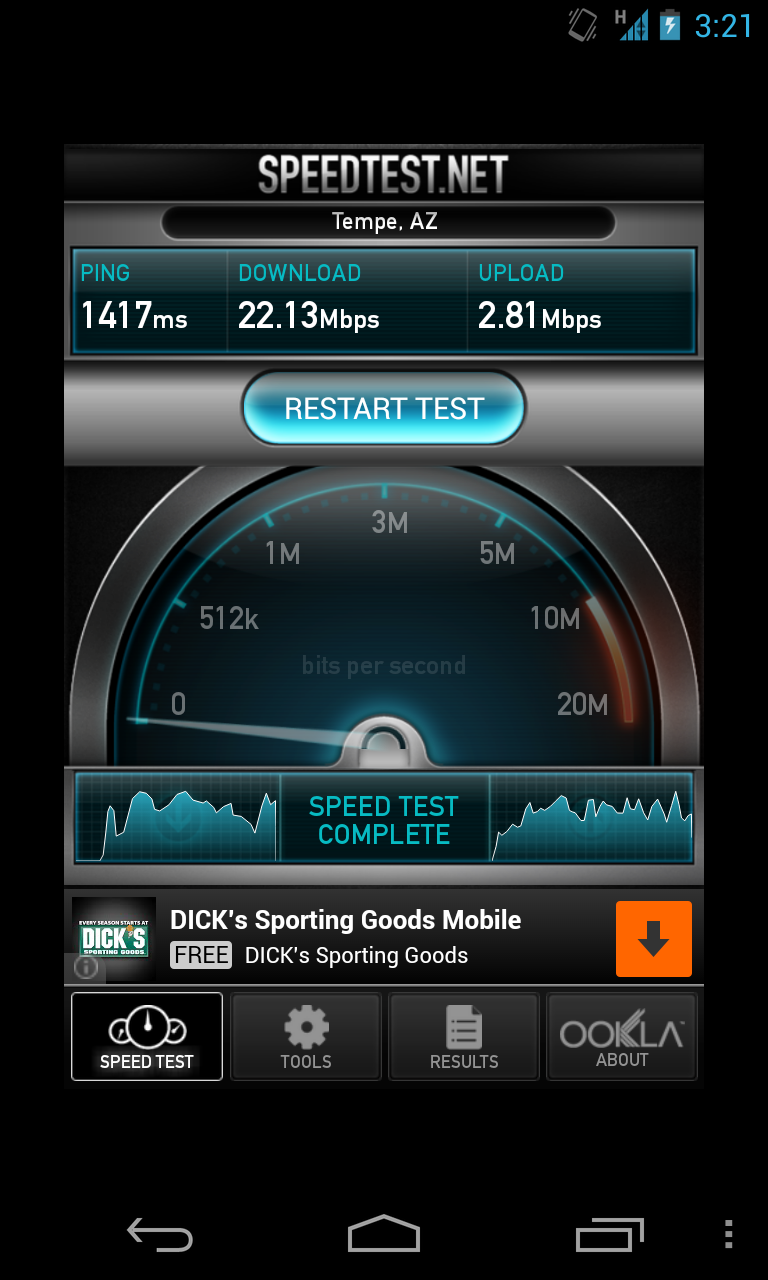
For those who aren't familiar with it, the Nexus 4 features Qualcomm's Snapdragon S4 Pro SoC - a quad-core 28nm Krait CPU with Qualcomm's next-generation Adreno 320 GPU. The combination proved quite formidable in the MDP/T we tested, as well as LG's recently announced Optimus G. The SoC drives a 4.7-inch 1280 x 768 IPS display and is paired with 2GB of LPDDR2 memory. The Nexus 4 ships unlocked with 8GB of NAND for $299 without a contract ($349 for the 16GB version). Pair that with DC-HSPA+ support and you get an absolute killer smartphone for use on T-Mobile: no contracts, very low monthly fees, and compelling cellular performance:
Brian will talk more about the combination in his full review, but rest assured that the lack of LTE is workable depending on T-Mobile coverage where you live/travel to.
The Nexus 10 also boasts a brand new SoC: Samsung's Exynos 5 Dual. The Exynos 5 Dual features two ARM Cortex A15 cores running at 1.7GHz as well as ARM's own Mali-T604 GPU. This happens to be the exact same platform used in the new Chromebook, just running Android. The Nexus 10 features a 10.1-inch 2560 x 1600 display, giving it the same resolution as the 13-inch MacBook Pro with Retina Display - but in an even smaller form factor. Google is also aggressive on Nexus 10 pricing: the 16GB WiFi-only tablet sells for $399, with the 32GB version going for $499.
Both Nexus devices run Android 4.2 and are guaranteed to be the first devices to be updated to upcoming Android revisions for the foreseeable future (it's the power of Nexus).
We haven't had a ton of time to test the devices and put this together so you're going to see combined performance charts throughout the rest of this article.

CPU Performance

The big story when it comes to CPU performance is a look at how the Cortex A15s perform under Android. Unfortunately we're still left with mostly browser based benchmarks to measure CPU performance, which actually highlights a major issue in our testing: Android V8 optimization doesn't seem to be anywhere near as good as it is under Chrome OS or Windows. As a result, all of the Nexus 10 performance scores end upslower than the new Chromebook - despite using the same SoC and running Chrome on both platforms. It's also possible that the Exynos 5 Dual in the Chromebook is allowed to burn a bit more power, translating to better performance, but either way the solution here in the Nexus 10 doesn't look as good across the board.
SunSpider Javascript Benchmark 0.9.1 - Stock Browser
SunSpider performance is good, but not significantly better than Qualcomm's Krait based Snapdragon S4. Both the iPhone 5 and RAZR i are able to outperform the Nexus 10. The S4 Pro based Nexus 4 tends to be in line with other S4 based devices - SunSpider doesn't really give much credit to the extra 2 cores.
BrowserMark
BrowserMark puts the Nexus 10 behind many platforms that should be faster, I'm even wondering here if there's some hard partitioning of memory bandwidth between the CPU and GPU to drive the 2560 x 1600 display that's simply choking the CPU here.
The Nexus 4 does ok, but again there seem to be some V8 optimization issues at work here under Android 4.2. At 1.5GHz it should deliver at least the performance of the dual-core Snapdragon S4 solutions.
Google Octane Benchmark v1
Octane is the first test where the Cortex A15s are really able to flex their muscle - the Exynos 5 Dual based Nexus 10 manages to outperform the RAZR i by 34%, and compared to the A6/Swift based iPhone 5 the advantage grows to 64%.
The Nexus 4 performs about in line with other Snapdragon S4 based devices, although once again the extra 2 cores don't seem to be doing much for it here at all.
Mozilla Kraken Benchmark
Kraken also paints the Cortex A15 based Nexus 10 in a good light: there's a 30% advantage over the RAZR i and a 76% advantage over the iPhone 5. These numbers will shrink a bit compared to other tablets, but not by much. The Nexus 4, once again, ends up performing similarly to dual-core Snapdragon S4 based devices.
Overall, the Nexus 10 results show us some real promise for what we can expect from ARM Cortex A15 based SoCs. The potential upside to this new architecture is huge.


Read More